
Mechanics Lien on Your Property: Owner Response Guide
There are a number of situations where, if you're having trouble collecting a payment you're owed, you may need to put a lien on a property. Placing a lien is one option that allows you to secure your debt and hopefully, eventually get paid. Two common types of liens are mechanics liens and judgment liens and the process to place each type of lien varies from state to state. How to put a lien on property can be confusing so it is important you know how to do it correctly or seek help from a professional lien filing service.
What Are Mechanics Liens? And What happens when you File a lien on a property?
Mechanics liens are filed by companies and individuals that provide labor or materials to a construction project on a piece of property. Check your state to see if you're eligible to file a mechanics lien by reviewing our Guidebooks, but generally, people who are contractors or subcontractors such as roofers, plumbers, electricians, architects, and more can file a mechanics lien.
There are many steps that precede the actual filing of a lien on a property and they differ from state to state. Your first step on all construction jobs should be to collect information about the project, property and owner as soon as you receive the work. You'll use this information to send invoices and file liens if necessary.
Before you begin work
Some states will require you to provide a notice to the owner and others that you're starting work or beginning to provide goods to a project. This is often referred to as a "preliminary notice" or notice of right to file lien. If you skip this step or fail to meet the state's notice laws, you can lose your right to file a mechanics lien.
Waiting on money for a job?
Tell us what happened and National Lien & Bond will connect you with an attorney in your state. Free consultation, no obligation.
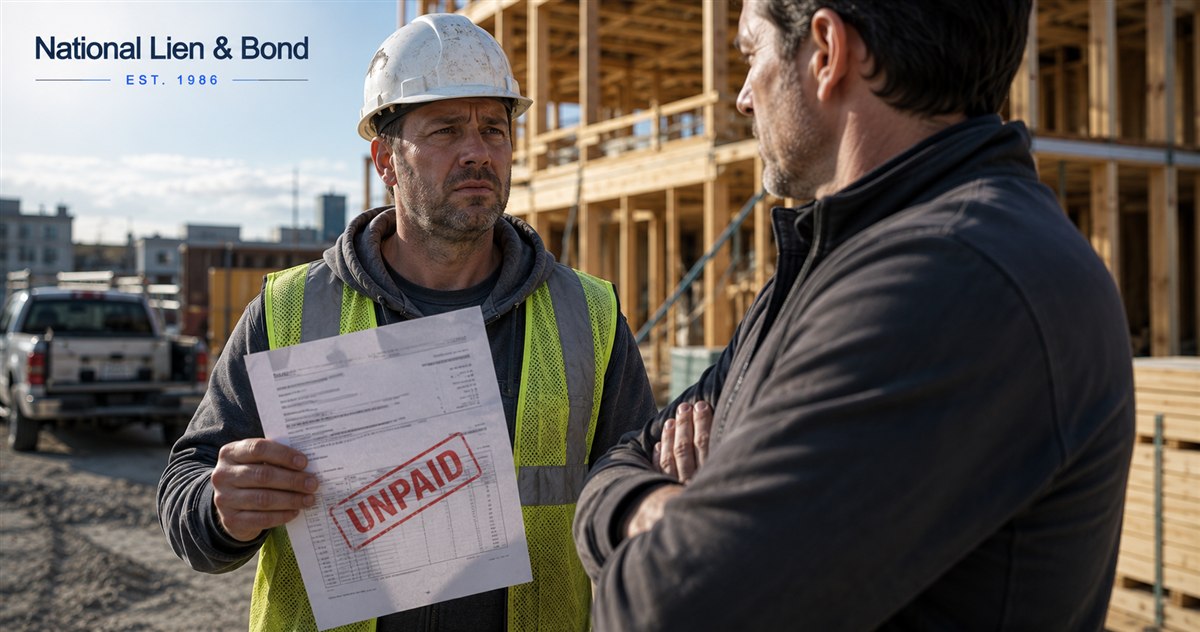
What happens when your payment doesn't show?
If you've sent an invoice, but you only receive a fraction of the amount you're owed or no payment at all, you'll start the process of filing a mechanics lien. Many states require you serve a notice of intent to file a lien on the property owner before you are allowed to file your lien. Failure to property file this notice can may any lien you file unenforceable.
What should You pay attention to when filing the lien?
The lien itself is a document filed in the county clerk or recorder's office on a specific project or the county you're working in. Research state laws to determine what specific information the lien needs to contain and call the county office to make sure you meet and local rules on formatting, copies, and fees. Be sure to pay attention to the timeline for this as they can be fairly short and missing the filing date may mean your forfeit your rights to file the lien.
After filing the lien, you need to send a copy of the lien on a property to it's owner, which you can do by dropping it in the mail as certified or registered mail, return receipt requested. You may also want to attach copies of your invoices and any other relevant supporting documents.
Once you've completed each of these steps required by your state's lien laws, you have secured a lien on a property. This doesn't mean your work is done! You need to pay attention to the timeline for the lien and either file a lien extension, cancel the lien, or take an appropriate action to collect on the debt.
Judgement Lien
A judgment lien, unlike a mechanics lien, is not limited to securing payment for construction work. Anyone who receives a judgment from a court can file a judgment lien against the property of the party who the judgment is against. However, in the context of the construction industry, a judgment lien can give you a second chance at placing a lien against the property to secure your debt.
If for some reason you don't file a mechanics lien on a property, you can still sue for the money you are owed. If you win, the court will enter a judgment for the debt, which can be filed against the debtor's property. Again, this type of lien will have laws that vary from state to state, so be sure to research the rules or consult an attorney to correctly put the judgment lien on the property.
In addition to obtaining a judgment, mechanics lien holders may also begin an action to foreclose on a piece of property. In this case, you may want to see what other liens are outstanding on the property and what the precedence of the liens are to determine if such action is likely to result in a payment to you.
Waiting on money for a job?
Tell us what happened and National Lien & Bond will connect you with an attorney in your state. Free consultation, no obligation.
Related Articles
When the Contractor Refuses to Pay the Subcontractor
When a general contractor will not pay, the subcontractor has to protect its rights through the contract and, when necessary, a mechanics lien. This guide walks through the contract, documentation, an informal resolution attempt, and the notice of intent to lien.
Read Article
When does a preliminary notice need to be served twice?
Contractors who treat every preliminary notice the same can lose their lien rights in two-notice states. This article explains the difference between a Notice of Right to File a Lien and a Notice of Intent to File Lien, and how to tell whether a state requires both.
Read Article
Understanding Washington State Lien Laws
A walkthrough of Washington's private-project mechanics lien rules, including the notice of right to claim lien and its 60-day look-back, the 90-day filing deadline, the 14-day owner notification, the eight-month enforcement window, and lien waiver cautions.
Read Article