
7 Facts You Should Know About Mechanics Lien in New York
If you're working on a construction work project in New York State and need to file a mechanics lien, here are seven important facts you must keep in mind before filing the lien. Having a complete and accurate mechanics lien filing is frequently the difference between being ignored and receiving payment.
New York State Does Not Require Preliminary Notice
While most states require some form of notice before you can file the official lien documents, New York does not require you to give the property owner any notice prior to filing a mechanics lien, no matter whether the project is commercial or residential. However, you must serve a copy of the lien on the owner either 5 days before filing the lien or within 30 days after filing the lien. You must also file your proof of serving a copy of the mechanics lien to the owner within 35 days of filing the lien.
Detailed & Accurate Lien Filing Documents are Crucial
The lien must include your name and address; the name of the owner of the property; the name of who you worked for and the labor and/or materials you provided; total value you contracted for and the outstanding amount owed to you; the first and last day you provided construction labor and materials; and a description of the construction property you are filing the lien against. The legal description of the property must meet all requirements of the office where you are filing, so consult the clerk where you are filing the lien to correctly describe the property. If any of this information is incorrect or left out mechanics lien will be void.
Waiting on money for a job?
Tell us what happened and National Lien & Bond will connect you with an attorney in your state. Free consultation, no obligation.
Stay Mindful of Filing Deadlines
In New York, there are different timelines for when a mechanics lien can be filed depending on the type of project you are working on. For example, work on single family residential projects where the bill remains unpaid must be filed within 4 months. On commercial projects, the deadline is 8 months. These time periods begin to run from the time of completion of the all construction or the final furnishing of your labor or materials.
Some Professionals Must Be Licensed: If your work requires a professional license, then the lien claimant must be a licensed contractor and authorized to do business in the state of New York.
Are You Qualified to File a Mechanics Lien?
There are some categories of suppliers who are not qualified to file a New York mechanics lien. One example of this is a material supplier who works under contract to the material supplier who works directly with the project. In other words, a second-tier material supplier is not qualified to file a mechanics lien, even if they remain unpaid for materials for a specific project. In those situations, they may need to look for contract enforcement options instead.
Landscape Artists Can Also File a Mechanics Lien
In New York, the law appreciates the value that a beautiful lawn can add to a building. New York's mechanics lien law specifically allows landscapers, nurserymen, and those selling "ornamental trees, roses, shrubbery, vines, and small fruit" to file a lien for their services and materials.
How Long is my Mechanics Lien Enforceable?
To file a lien in New York, your documentation must either be signed by you or it must be accompanied by another document granting the third party, such as a lawyer, the authority to sign on your behalf.
If you need to file a mechanics lien in New York, the secret is to pay attention to your timeline, whether you're qualified to file, and to keep track of when your lien expires so you can renew or take appropriate enforcement action. National Lien & Bond lawyers can make sure your New York mechanics liens are filed on time and notify you of your options if you still haven't been paid after a year.
Waiting on money for a job?
Tell us what happened and National Lien & Bond will connect you with an attorney in your state. Free consultation, no obligation.
Related Articles

California Mechanics Lien Deadlines (2026 Timing Guide)
California's mechanics lien process turns on timing: the 20-day notice of right to file lien, the contested question of when "completion" occurs, and the 90-day or 60-day window to record the lien afterward.
Read Article
Mechanics Lien in Georgia - Everything You Need To Know
A state-specific guide to mechanics liens in Georgia covering when preliminary notice is required, the 90-day filing deadline, county recording rules, eligibility and licensing requirements, lien waivers, and attorney's fees recovery.
Read Article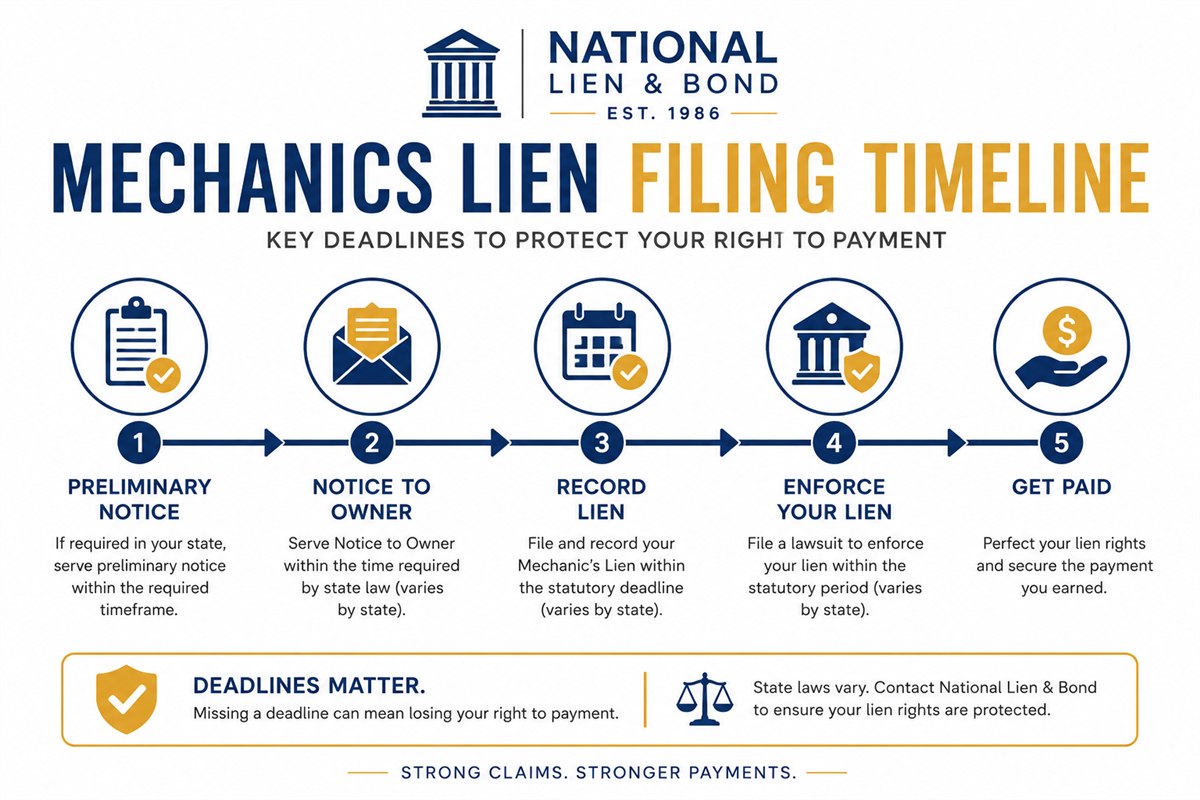
Filing a Lien to get paid for your work
A mechanics lien is a recorded claim against the property where you worked, giving you the right to have it sold to satisfy what you are owed. This overview covers the three core requirements every state shares: proper notice, accurate information, and meeting deadlines.
Read Article